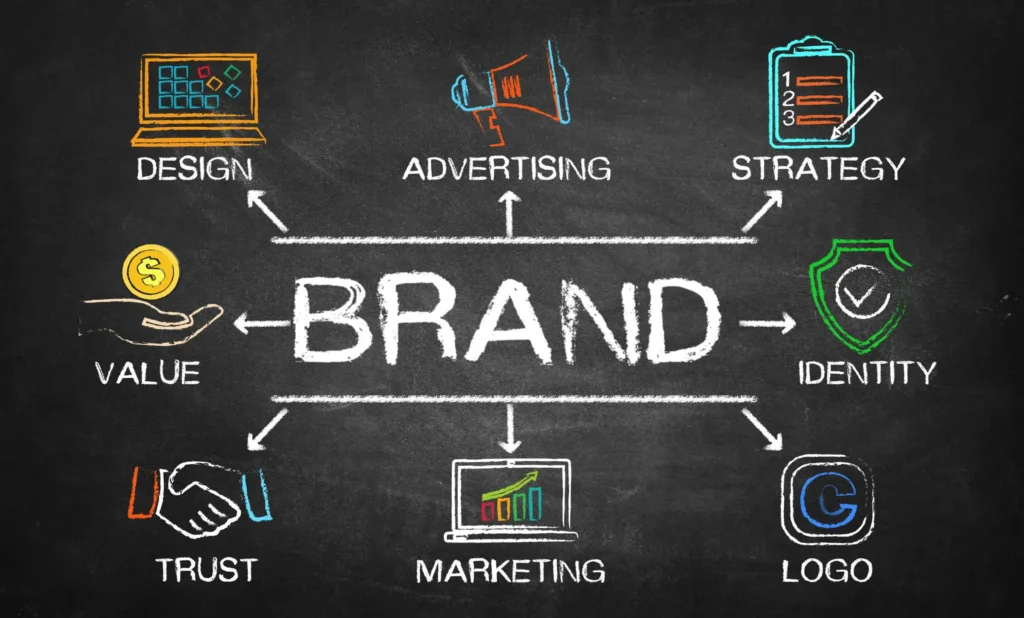
A lot of business owners think brand identity begins and ends with a logo. It’s a much bigger piece of the puzzle than that.
Brand identity is essentially how your business shows up consistently across every touchpoint — visually, in tone, and in the actual experience customers have with you. Get it right, and people recognize and trust you before they’ve even read your pitch.
What Brand Identity Actually Includes
Brand identity encompasses your visual elements (logo, colors, typography), your tone of voice, and the consistent experience customers have across every interaction with your business. It’s the sum of impressions that build recognition and trust over time.
Element 1: Visual Identity
This is the most obvious piece — logo, color palette, typography, imagery style.
- Choose 2-3 core colors and stick with them everywhere, from your website to your packaging
- Pick a consistent typography style, not a different font on every platform
- Keep your logo simple enough to work at small sizes, like a social media profile picture
Element 2: Brand Voice and Tone
How does your business actually sound when it communicates? Formal and authoritative, or casual and friendly? A mismatch here confuses customers — imagine a luxury skincare brand writing captions like a college meme account.
I’ve noticed businesses that skip defining this end up sounding inconsistent across platforms, which subtly undermines trust even if customers can’t quite articulate why.
Element 3: Brand Values and Positioning
What does your business actually stand for, beyond making money? A clear brand position — what makes you different, and who you’re specifically for — helps customers choose you over competitors offering similar products.
[link to related guide on marketing strategy here]
Element 4: Consistency Across Touchpoints
Your website, packaging, social media, customer service tone, even your email signature — all of it should feel like it’s coming from the same business. Inconsistency, even small, chips away at trust over time.
Related resourceContent Marketing Strategy for Small Businesses
Step-by-Step: Building Your Brand Identity
- Define your target audience specifically — not “everyone,” but a real person with real problems
- Identify what genuinely differentiates you from competitors
- Choose your visual elements and document them in a simple brand guide
- Define your tone of voice with a few example phrases showing what fits and what doesn’t
- Apply this consistently across every platform, starting with your highest-traffic ones
Common Brand Identity Mistakes
- Changing visual elements too frequently, which prevents recognition from building
- Copying a competitor’s aesthetic instead of developing something distinct
- Focusing purely on visuals while ignoring tone of voice and customer experience
- Not documenting brand guidelines, leading to inconsistency as the team grows
FAQs
How much does it cost to build a brand identity? It ranges widely — a basic DIY approach using tools like Canva costs very little, while professional branding agencies can run into lakhs depending on scope.
Do small businesses really need a formal brand identity? Yes, even a simple, well-thought-out identity helps small businesses look more credible and memorable against larger, better-funded competitors.
How often should a brand identity be updated? Major changes should be infrequent — every 3-5 years at most — though minor refinements can happen more regularly without confusing customers.
What’s the difference between a logo and a brand identity? A logo is one visual element; brand identity includes the logo plus colors, typography, tone of voice, and overall customer experience.
Can a brand identity change as a business grows? Yes, and often should, but changes should be gradual and intentional rather than sudden, to avoid losing existing brand recognition.
Conclusion
A strong brand identity isn’t just a nice-looking logo — it’s the consistent experience and feeling customers get every time they interact with your business. Define your audience, nail down your visual and verbal identity, and apply it everywhere, without fail. Consistency, more than cleverness, is what actually builds recognition over time.
Suggested alt text 1: “Brand identity mood board with logo, colors, and typography” Suggested alt text 2: “Small business packaging showing consistent brand design”