Water plays a bigger role in business operations than many people realize. In restaurants, hotels, healthcare facilities, manufacturing plants, and office buildings, water quality can influence everything from daily comfort to equipment performance and product consistency. When water contains unwanted minerals, dissolved substances, or other impurities, the effects may show up in unexpected places, including stained fixtures, scale-covered pipes, inconsistent production results, and higher maintenance costs.
For businesses that depend on a steady supply of suitable water, choosing the right treatment system is more than a technical decision. It’s an investment in reliable operations. Understanding the available technologies, evaluating water quality, and planning for ongoing maintenance can help organizations make choices that work in the real world, not just on paper.
Why Commercial Water Treatment Requires Careful Planning
Commercial facilities rarely use water in exactly the same way. A hotel may need dependable water for guest rooms, kitchens, laundry, and beverage preparation. A food processing facility may require water that meets specific quality standards for its production process. Meanwhile, a laboratory or manufacturing operation could have much stricter requirements for dissolved minerals and other substances.
Because these needs differ, a treatment system should be selected according to the facility’s actual water demands. Installing equipment that’s too small can lead to inadequate output during busy periods. Choosing a system that’s unnecessarily large may increase initial costs, energy use, and maintenance requirements without providing meaningful benefits.
Businesses should consider daily water consumption, peak demand, incoming water pressure, available installation space, and the quality requirements of the intended application. It’s also important to understand whether the facility receives municipal water or relies on a private source.
These details help establish a realistic starting point. Instead of purchasing equipment based on broad marketing claims, decision-makers can focus on measurable requirements and solutions designed to meet them.
Understanding Commercial Reverse Osmosis Technology
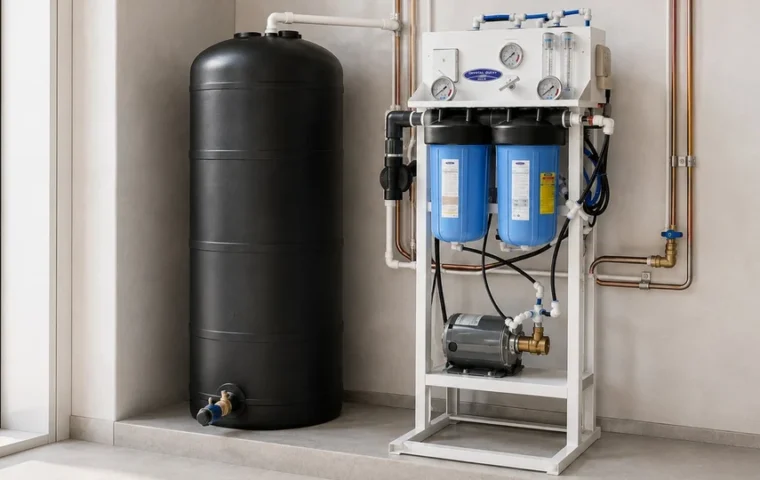
Reverse osmosis is a widely used water treatment process that relies on a semipermeable membrane to separate water from many dissolved substances. Pressure pushes water through the membrane, while a portion of the dissolved material is retained in a concentrated reject stream.
For businesses that need lower levels of dissolved solids, commercial reverse osmosis systems can provide a practical treatment option. Depending on the design and operating conditions, these systems can reduce many dissolved salts and other substances, helping produce water suitable for particular commercial applications.
Restaurants and beverage producers may use reverse osmosis to achieve more consistent water for drinks and food preparation. Certain manufacturing operations may use it as part of a larger treatment process where dissolved minerals could interfere with product quality or equipment performance. The exact requirements depend on the industry, and reverse osmosis alone may not meet every application standard.
System design matters considerably. Membrane capacity, feedwater quality, operating pressure, recovery rate, and daily production requirements all influence performance. A system designed for a small café may not be suitable for a busy hotel or industrial facility.
Reverse osmosis also produces wastewater, often called concentrate or reject water. Businesses should understand the expected recovery rate and consider whether any permitted reuse options are appropriate. Efficient operation involves balancing water quality, production capacity, operating expenses, and responsible water use.
Related resourceChoosing the Right Water Treatment System for a More Comfortable Home
Start With a Clear Picture of Water Quality
Before selecting equipment, businesses need to understand the water entering their facility. Water from the same municipal supply can behave differently once it passes through building plumbing or encounters site-specific conditions. Private wells may introduce additional considerations, including naturally occurring minerals and microbiological concerns.
A thorough water quality testing and analysis process helps identify the substances that need attention and provides a foundation for system design. Depending on the application, testing may examine hardness, pH, total dissolved solids, iron, manganese, chlorine, or other relevant parameters. Specific industries may require additional testing based on regulatory obligations or production standards.
The objective isn’t simply to collect a long list of laboratory results. It’s to understand what those results mean for the business.
For example, high hardness can contribute to scale formation in pipes, boilers, and heat exchangers. Elevated dissolved solids may affect certain manufacturing processes or the taste of prepared beverages. Sediment can interfere with downstream equipment, while particular contaminants may require dedicated treatment methods.
Testing should be performed using appropriate sampling procedures and qualified laboratories where necessary. Results should then be reviewed alongside the intended use of the treated water. Drinking water requirements, process water specifications, and high-purity industrial applications are not interchangeable.
Testing can also establish a baseline for future monitoring. By comparing later results with the original findings, facility managers can identify changes and investigate potential performance problems before they disrupt operations.
Why Customized Filtration Makes a Difference
There is no universal filtration system that solves every water problem. A treatment method that works well for one business may be ineffective or unnecessarily expensive for another. This is why customized filtration solutions can be valuable for facilities with specific water quality requirements.
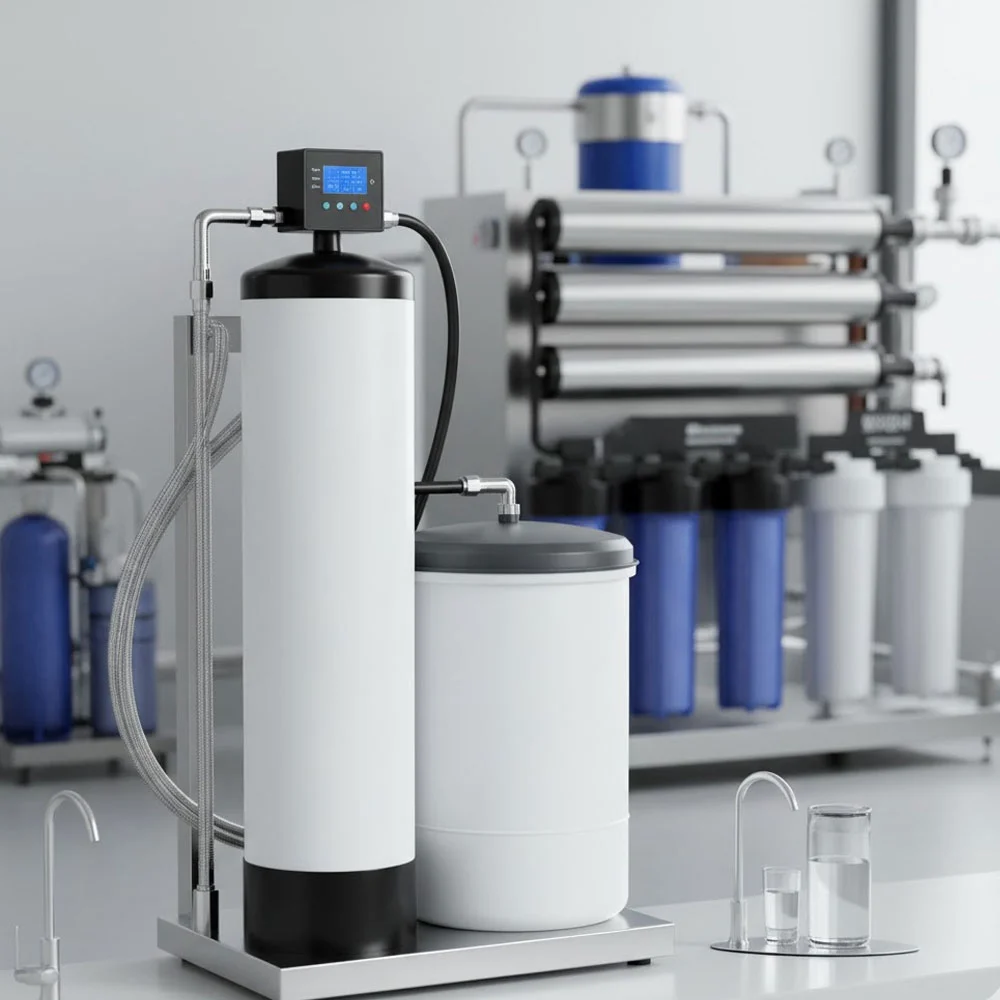
A customized approach begins by matching treatment stages to identified needs. Depending on the incoming water and final application, a system might combine sediment filtration, activated carbon, water softening, reverse osmosis, or other specialized processes.
Sediment filters can help remove suspended particles. Activated carbon may reduce chlorine and certain organic compounds when properly specified. Water softeners address hardness minerals, while reverse osmosis reduces many dissolved substances. Each technology has a distinct role, and the order in which treatment stages are arranged can influence overall performance.
Consider a restaurant experiencing both noticeable chlorine taste and scale buildup in its equipment. A single filter may not address both issues effectively. A combination of suitable filtration and hardness treatment could be more appropriate, depending on testing results and equipment requirements.
Customization also means considering practical realities. The system must fit the available space, handle peak demand, and remain accessible for servicing. Controls, monitoring instruments, and alarms may be useful where water quality needs to remain consistent throughout operating hours.
Related resourceFinding the Right Water Treatment System for Your Business
A carefully designed system doesn’t have to be the most complicated one. In many cases, the best solution is simply the least complicated arrangement that reliably meets the facility’s documented needs.
Managing Maintenance and Operating Costs
Water treatment equipment requires ongoing attention. Filters need replacement, membranes may need cleaning or changing, and pumps, valves, sensors, and other components require periodic inspection. Ignoring maintenance can gradually reduce performance and increase the likelihood of unexpected downtime.
Commercial operators should establish a service schedule based on manufacturer guidance, operating conditions, and monitoring results. Keeping records of filter changes, pressure readings, water production, and laboratory results makes it easier to identify patterns and plan maintenance before problems become urgent.
Operating costs deserve equal attention during the purchasing process. The initial equipment price is only part of the total expense. Businesses should also account for electricity, replacement components, cleaning chemicals where applicable, labor, wastewater, and any required testing.
An inexpensive system may become costly if its consumables are difficult to source or it needs frequent service. On the other hand, a higher-priced system isn’t automatically the better investment. The useful comparison is between systems that meet the same requirements and their expected long-term costs.
Choosing a Water Treatment Partner
Commercial water treatment is easier to manage when businesses work with knowledgeable suppliers and service professionals. Look for a provider that asks detailed questions about water use, explains the proposed treatment stages, and bases recommendations on test results rather than assumptions.
Ask about system capacity, expected water recovery, maintenance intervals, replacement part availability, and the support offered if equipment performance changes. Businesses with strict quality requirements should also understand how the system will be monitored and verified.
Reliable water treatment doesn’t end when the equipment is switched on. It depends on thoughtful design, proper installation, consistent maintenance, and a clear understanding of what the treated water must achieve.
For businesses of every size, those fundamentals can make daily operations more predictable. With sound planning and suitable technology, water treatment becomes a dependable part of the operation rather than a recurring source of frustration.